A promotional video realised by Joseph Kennedy after the Takemusu Aikido Ireland weekend in County Kilkenny last May
Nore Valley Aikido Club Launches Beginners Course
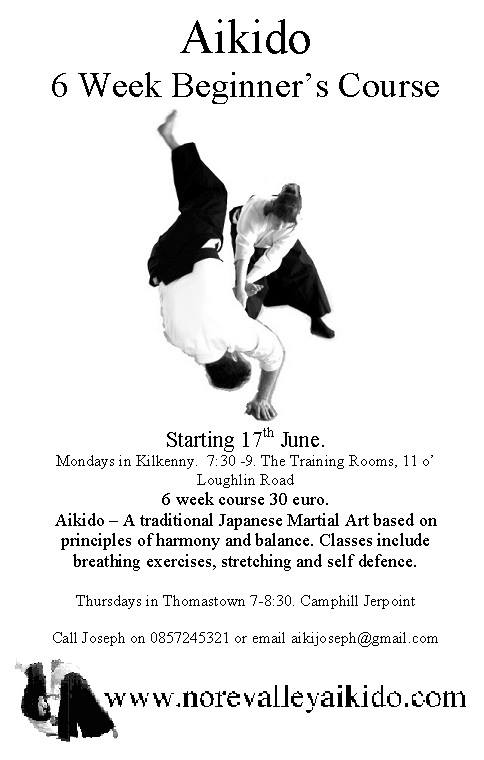
AIKIDO 6 WEEK BEGINNER’S COURSE
Kilkenny: Monday 7.30-9pm – The Training Room, 11 O’Loughlin Road
Thomastown: Thursday 7-8.30pm – Camphill Jerpoint
Starting date: Monday 17 June 2013
Instructor: Joseph Kennedy
Training Fee: €30
Info & Bookings: Tel. 085/7245321
Email: aikijoseph@gmail.com
Web: www.norevalleyaikido.com
May 2013 Seminar Photogallery
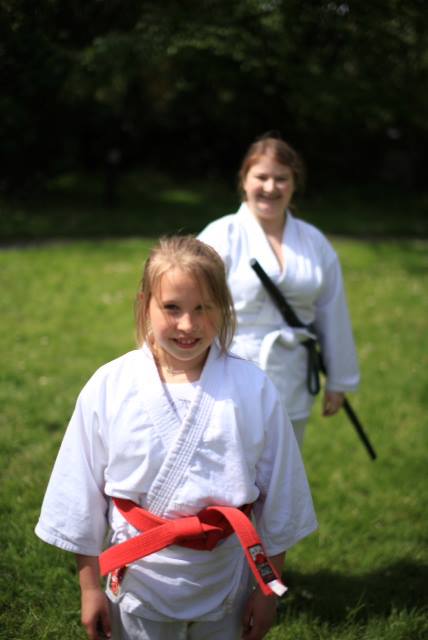
Enjoy!! More to come soon… 🙂
https://www.facebook.com/media/set/?set=a.162903447217110.1073741827.128296637344458&type=1
https://www.facebook.com/media/set/?set=a.163099967197458.1073741828.128296637344458&type=3
https://www.facebook.com/media/set/?set=a.601918179826784.1073741832.100000258237171&type=3
Takemusu Aikido Ireland Summer Camp 2013

Takemusu Aikido Ireland Summer Camp 2013
Simone Chierchini, Takemusu Aikido Association Italy Senpai
24-25 August 2013
Galway, Ireland
NUI Galway Sports Centre, National University of Ireland Galway
http://www.kingfisherclub.com/nuigalway.html
INFO IRELAND: Patrick Mulkerrin – Tel. (+353) 0872896063 Email: information.aoi@gmail.com
INFO ITALY: Simone Chierchini – Tel (+39) 3453943286 Email: schierchini@gmail.com
TRAINING SCHEDULE: Saturday 24 – 10-11.30 Bukiwaza Aikijo, 11.30-1 Taijutsu; 15.30-17 Bukiwaza Aikiken, 17-18.30 Taijutsu, 18.30-19.30 Special Keiko (by invitation only). Sunday 25 – 9.00-10.30 Bukiwaza Aikijo, 10.30-12.00 Taijutsu; 13.30-15 Bukiwaza Aikiken, 15-16.30 Taijutsu
FEES: Standard – Full Course 50€, One Day 30€; Unemployed & U18 Full Course 35€, One Day 20€
Bonus Classes Before the May Course in Kilkenny

Simone Chierchini going to be in Kilkenny, guest of Joseph Kennedy, starting from Wed 22/05 in the afternoon.
Anyone willing to practice on Wednesday and Thursday can join us and make the most of Simone’s staying in Ireland.
There will be personal and in depth tuition for those who will make themselves available.
Simone has explained how he is glad to offer this opportunity to Joseph and to any other friend, as a sign of his everlasting affection for Ireland and Irish Aikido.
Thursday 21/05: class in Thomastown, 7 till 9pm
Friday 22/05: session in Inistioge, 10am till 12, then coffee time in Joseph’s place
Intensive Course in Takemusu Aikido in Kilkenny

Simone Chierchini – Aikido Italia Network – 5th Dan Aikikai
24-25-26 May 2013
Kilkenny, Ireland
Camphill Jerpoint, Thomastown
Training Times: Fri 6:30-7:30 Bukiwaza Jo, 7:30-8:30 Bukiwaza Ken, 8:30-9:30 Taijutsu
Sat 9-11 Bukiwaza Jo, 11-12.30 Taijutsu; 3-5 Bukiwaza Ken, 5-6.30 Taijutsu; From 6.30 Aikikai Dan Grading Session
Sun 9-11 Bukiwaza Jo, 11-12.30 Taijutsu; 2-3.30 Bukiwaza Ken, 3.30-5 Taijutsu
Fees: Full Course: 45 euro, unemployed 30 euro, U18 20 euro; Free of charge for Camphill for volunteers
Info Ireland: Joseph Kennedy (+353) 085 724 5321 aikijoseph@gmail.com
Info Italy: Simone Chierchini (+345) 3453943286 schierchini@gmail.com
Facebook Event Page: https://www.facebook.com/events/468307516568704/469595229773266/?notif_t=like
Spring Course 2013 in Cairo
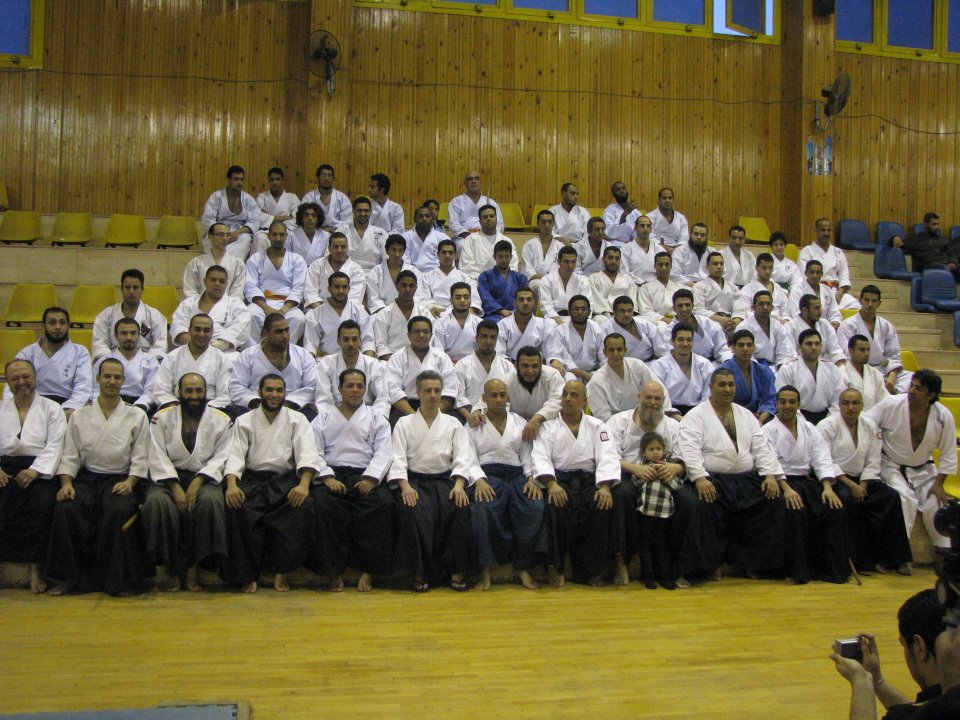
The Spring Course 2013 of Takemusu Aikido Egypt will be held in Cairo from 19th to 21st April and it will be directed by our sensei, Simone Chierchini, who is also Takemusu Aikido Egypt – EAAI Head Instructor.
For more info go to http://takemusuaikidoegypt.com/english/
Video Trailer: Summer Camp Vasto 2013 (English Version)
Summer Camp Vasto 2013
2-3-4 August 2013
Vasto, Abruzzi, Italy
Francesco Corallini – Takemusu Aikido Association – 5th Dan Aikikai – 5th Dan Iwama Ryu Bukiwaza
Simone Chierchini – Takemusu Aikido Association – 5th Dan Aikikai – 3rd Dan Iwama Ryu Bukiwaza
The Giza Pyramids Photo Shoot-out

Monday, March 12, 2012 witnessed an event that never happened before in the history of Aikido and Budo, as the Egyptian Association of Aikido Instructors organised the first Aikido Seminar ever under the foot of the Pyramids at Giza.
Egyptian Pharaonic culture and Japanese Budo unified in a single entity, with Simone Chierchini Sensei being the first in the history of Aikido to teach the Art at the foot of the Pyramids.
International Aikido expert Chierchini Sensei expressed is joy and gratitude for this great event and spoke about the enormous energy that he felt next to the Pyramids and how to benefit and enjoy this powerful energy.
Lunedì 12 Marzo 2012 è stato testimone di un evento mai accaduto prima nella storia di Aikido e Budo, quando l’Egyptian Association of Aikido Instructors ha organizzato il primo Seminario Aikido mai tenuto ai piedi delle Piramidi di Giza.
La cultura dell’Egitto faraonico e il Budo giapponese si sono unificati in un’unica entità, mentre a Simone Chierchini Sensei è toccato l’onore di essere il primo nella storia dell’Aikido ad insegnare l’arte ai piedi delle Piramidi.
L’esperto internazionale di Aikido Chierchini Sensei ha espresso la sua gioia e gratitudine per questo grande evento e ha parlato dell’enorme energia che ha sentito vicino alle Piramidi e di come beneficiare e godere di questa potente energia.
شهد يوم الإثنين 12 مارس 2012 الماضى حدثاً جلل سجل فى تاريخ الآيكيدو العالمى كالأول من نوعه حيث نظمت الرابطة المصرية لمدربى الآيكيدو سيميناراً تحت سفح الآهرامات بالجيزة لتمتذج الحضارة المصرية الفرعونية بالثقافة اليابانية القتالية فى كيانٍ واحد و ليكون سيمونى كركينى سنسيه الأول فى تاريخ الآيكيدو الذى يدرس الآيكيدو فى سفح الهرم
و لتدخل كذلك الرابطة المصرية لمدربى الآيكيدو التاريخ كأول مؤسسة للآيكيدو تنظم سيميناراً تحت سفح الهرم
و لقد عبَر الخبير العالمى كركينى سنسيه عن سعادته البالغة بهذا الحدث الجلل و تحدث عن كم الطاقة الهائلة الذى شعر به بجانب الأهرامات و كم الإفادة و الإستمتاع بهذه الطاقة القويه
Simone Chierchini
Coordinatore Aikido Italia Network
Technical Advisor Egyptian Association Aikido Instructors
12 March 2012
Giza, Egypt
Photoalbum of 77 Pics
Photo: Muhammad Khedr
Interview With Hitohira Saito – Part 1

Among the many questions that Hitohiro Saito Sensei politely replied to, you can read of the special connection between his father, Morihiro Saito Sensei, and the Founder of Aikido Morihei Ueshiba, at whose side he lived for 26 years; have an idea of the father/son, teacher/student relationship among Morihiro and Hitohiro; hear the version of Hitohiro sensei in relation to its break with the Aikikai Hombu Dojo… but also what it means the inheritance of the Founder of Aikido today and the prospects of Aikido in an increasingly disharmonious world


On the occasion of the Dento Iwama Ryu Aikido International Koshukai, held in Modena, Italy on 24-25-26 June 2011, Simone Chierchini had the opportunity to realize a video interview with Hitohiro Saito, Head Instructor of Iwama Shin-Shin Aiki Shuren-kai (岩 间 神 信 合 气 修练 会), the school founded by Hitohiro on the death of Morihiro Saito Sensei. The interview, held in the premises of Utensileria Modenese, generous sponsor of the Koshukai directed by Hitohiro Saito Sensei, took place in the presence of the European Senpai of Iwama Shin Shin Aiki Shuren-kai and was made possible thanks to the valuable work of Giancarlo Giovannelli, who acted as interpreter.
CHIERCHINI
The first question I would like to ask, Sensei, does not concern Aikido but rather the News: living in Japan today, what does it mean the tragedyof the Fukushima disaster for the average Japanese person?
SAITO
The earthquake and tsunami directly caused the Fukushima nuclear disaster. The world’s nuclear agency has revealed deficiencies in the management of the nuclear power plant, therefore there are also human responsibilities for what happened. However, let’s leave that aside. In the early days, the reading of data relating to the leakage of radioactive material from the plant were very high, but fortunately at this point the level of radiation in areas relatively distant from the central are gone down.
Currently, people who feel with the nuclear issue the most are the mothers who have young children, because the smaller is the child and more consequences of radiation exposure over time. Immediately after the accident we had the problem that the authorities did not provide correct information, there was a kind of censorship. This has caused a reaction and now I feel that what is communicated to us is the truth.

I live in the Ibaraki province, at about 150 km from the city of Fukushima and I think that we should not risk to be exposed to nuclear radiation: it’s a matter of time, of course. However the incident has made everyone more sensitive to the problem.
CHIERCHINI
In relation to the last problem, one could say that this is the tip of the iceberg: our world is gradually becoming further removed from its natural state and one could argue that it has become more and more disharmonious. In this context, how does it fit the practice of Aikido as a way of harmony? What responsibility lies with Aikido teachers in this kind of world?
SAITO
I don’t know if I can provide a correct answer.
Humans are an element of nature. There is a theory that if human beings disappeared from the planet, it would revert to its ideal state; this is paradoxical. In Aikido, however, the Founder thought that mankind had the role of governing nature in order to achieve an ideal condition.
The Founder used to speak of misogi, an activity of purification with which should training sessions in Aikido should start. When an inner conflict begins, from time to time we are faced with choices. If we possess decision-making skills, this is good, because each time we can make a conscious choice between good and evil.
I live in a rural area, away from the disaster area, however at the time of the nuclear accident I was still able to see the force of reaction of the nature. When practicing Aikido, if the students learn how to avoid negative, destructive attitudes towards others, that is their partners, certainly they will develop the same behavior in relation to nature, of which mankind is part.
O’Sensei preached non-violence. If one acts as I said, mankind could return to a more balanced condition of greater harmony between humans and nature.
The Way of the Warrior, Budo and agriculture, Nogyo, are complementary. The point of contact between the way of the warrior and agriculture is that both prepare for adversities and because of that it is also important to begin from the basics, the kihon. When we are forced to face nature’s caprices, we all must collaborate so that the problem at hand is solved or reduced.
CHIERCHINI
Next question brings us deeper in the world of Aikido and especially of Iwama Aikido: Sensei can you explain for our readers the role of Morihiro Saito Sensei in relation to the teaching of the Founder?
SAITO
When the second world war ended, my father became a student of O-Sensei’s dojo. There was only O-Sensei’s practiced in the dojo. At the time, my father got a job with the state railways and used to work at night, returning home in the morning. According to the custom of the time, the ones who had worked at night were entitled to two days -with the night in between – off; therefore he could spend many hours with O-Sensei.

The idea of O-Sensei when he came to Iwama was to practice both agriculture and Budo, so my father helped O’Sensei to work in the fields. The Founder was born in an era when those who taught martial arts were always with their students, who lived with their teacher. The teacher eventually tended to become attached to this type of student who worked the land and trained with him, because they were always together. This is the uchi-deshi system, where the internal student lives in the house of his sensei. My father experienced this situation.
Post-war Japan was a poor country, because all the resources were used during the war. Students who helped the Founder, also had their field to cultivate, because there was nothing to eat. Those who could not or would not help O’Sensei in his agricultural activities, gradually gave up and were not to be seen anymore. In the mentality of a typical Japanese of that period, the ones who could not or would not help the teacher in these other extra-dojo activities, did not feel that could be taught the techniques at all.
My father had the good fortune to continue to stand alongside his teacher; so at times, even as they cultivated the vegetable garden, O-Sensei would think of a new technique, put the hoe and say: “Saito! Go to the dojo to get the bokken!”. Then, in the middle of the field, or wherever they were, they moved from farming to martial arts. In the evening came the other students of the dojo, known as soto-deshi (external students) and my father often had to go work for the railroad. During the day, however, for many years he was able to see and study with care the techniques of the Founder.
At that time the idea of paying in cash the teacher was unheard of; the student helped his teacher providing manpower. Since there was not much money and O-Sensei himself was not at all wealthy, to say the least, my father and the other students organised small money collections and donated what they could put together to the wife of the Founder, Hatsu, to pay for the electricity. Basically at the time O-Sensei did not earn anything, had no fixed income, just because there was not the idea of a fixed monthly fee to be paid to the teacher. Apart from the labor force received by the students, the only cash income for him came from the granting of Dan grades: once the ceremony was over, the student who had received the Dan put his offer on the kamiza. Also, when O-Sensei visited other dojos to give what nowadays we would call seminars, he received “thanks” in the cash. Some time soon after the war ended, some of the students used to bring sacks of rice to thank O-Sensei for his teaching efforts.
My father has always been close to O-Sensei and in many occasions he has declared that his role was to transmit all that he had lived in contact with the Founder. I repeat, this is what he always told me.
CHIERCHINI
What are your memories of the Founder, Sensei? Especially your memories of Morihei Ueshiba from a human point of view.
SAITO
My father was gifted the land on which to build his house from the Founder, then he got married and after we, brothers, were born. I remember that my mother was always in the Ueshiba family home to help them. Therefore we newborn children lived in the house of O’Sensei, because our mother was always there.
I have not seen O’Sensei the first time when I started doing keiko, I saw him as soon as I was born! And I’ve also heard O’Sensei’s kiai when I was still a fetus in the womb of my mother… I do not think to the Founder like an outsider, for me he is some kind of a grandfather.

He was a man who had something special: if the aspects of daily life that concerned him were common, he was a awesome person. My parents always addressed him using referential language and I felt the distance, the stature of this person.
His posture was always correct, I have never seen him break it: even when he drank, he took the cup with both hands, thanking the gods, then placed it down once more with both hands, formally, according to the traditional system. We saw that this person was so revered by our parents, therefore in his presence we were always polite, because it was natural that we respected him: he had an important aura around him.
I had a beautiful image of O-Sensei and his wife, I never perceived them as two elderly people similar to the other village elders. Both were very devoted. Mrs. Ueshiba, having been born in the Meiji period, a historical period of transition, was a person who paid great attention to food and knew how to manage the economy of the house.
End of Part 1 (To be continued)
Italian to English Translation by Simone Chierchini
Watch Slideshow from H. Saito International Koshukai in Modena (italy), June 2011
Copyright Simone Chierchini ©2011
Per le norme relative alla riproduzione consultare
http://simonechierchini.wordpress.com/copyright/
 AIKIDO MAYO